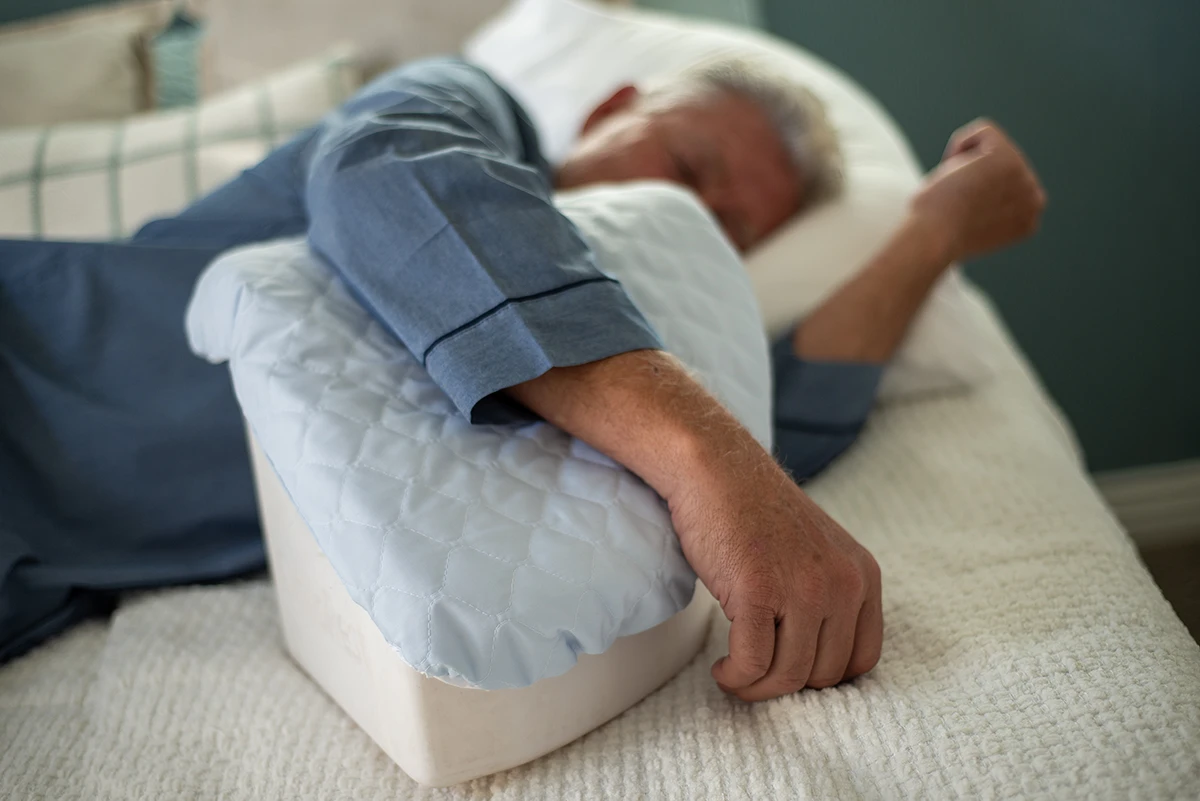
Dr. Stowell's patients had the same complaint after every shoulder surgery: "I can't sleep." The research was clear — poor sleep doesn't just feel bad, it actively slows healing. So he set out to fix it.
Buy Now

During deep sleep, the body releases growth hormone and prolactin — both critical for repairing damaged tissue, regenerating cells, and promoting muscle recovery. Without sufficient deep sleep, this process is significantly impaired.
Sleep is when the body produces cytokines, protective proteins that regulate inflammation and fight infection. Sleep deprivation compromises this immune response, increasing the risk of surgical site infections and slowing wound healing.
Research confirms a reciprocal relationship between sleep and pain. Adequate sleep helps regulate pain perception and can reduce the need for narcotic pain medication. Poor sleep does the opposite — lowering your pain threshold and intensifying discomfort.
Collagen production increases during sleep, leading to stronger tissue at the surgical site. This is especially important for incision healing, where robust collagen formation contributes to better wound closure and reduced scarring.
Surgery triggers elevated cortisol levels. Prolonged cortisol elevation hampers healing and suppresses immune function. Quality sleep helps bring cortisol back down, creating a more favorable environment for recovery.

Most people think of sleep as downtime. But for a post-surgical patient, sleep is when the body does its most important repair work. Here's what the research tells us happens — or fails to happen — while you sleep after surgery.
The connection between sleep and surgical recovery isn't anecdotal. It's supported by a growing body of peer-reviewed research.
.webp)
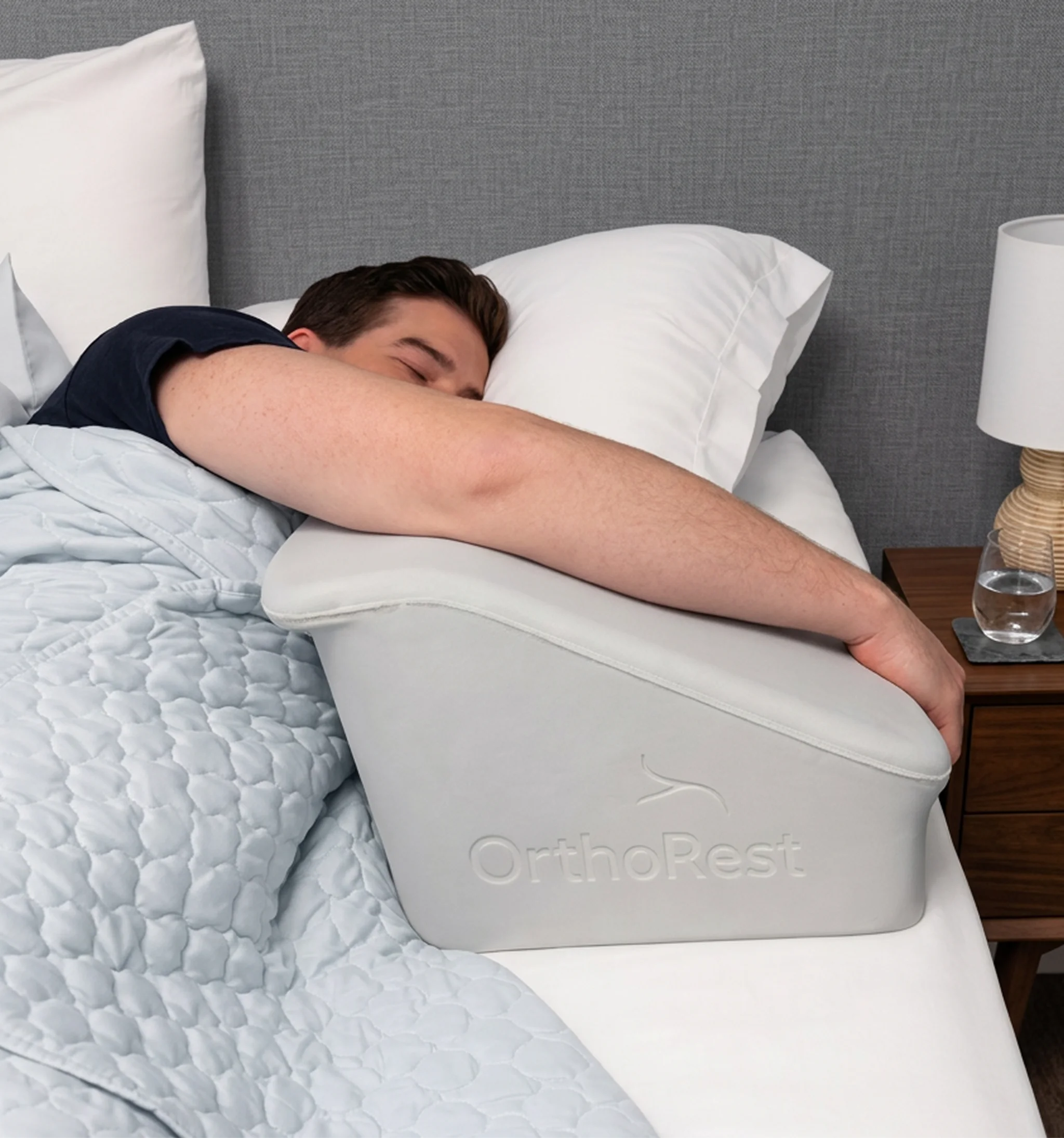
Contoured to cradle the arm in a supported, slightly elevated position — reducing strain on the surgical site and preventing the painful rolling that wakes patients up at night.
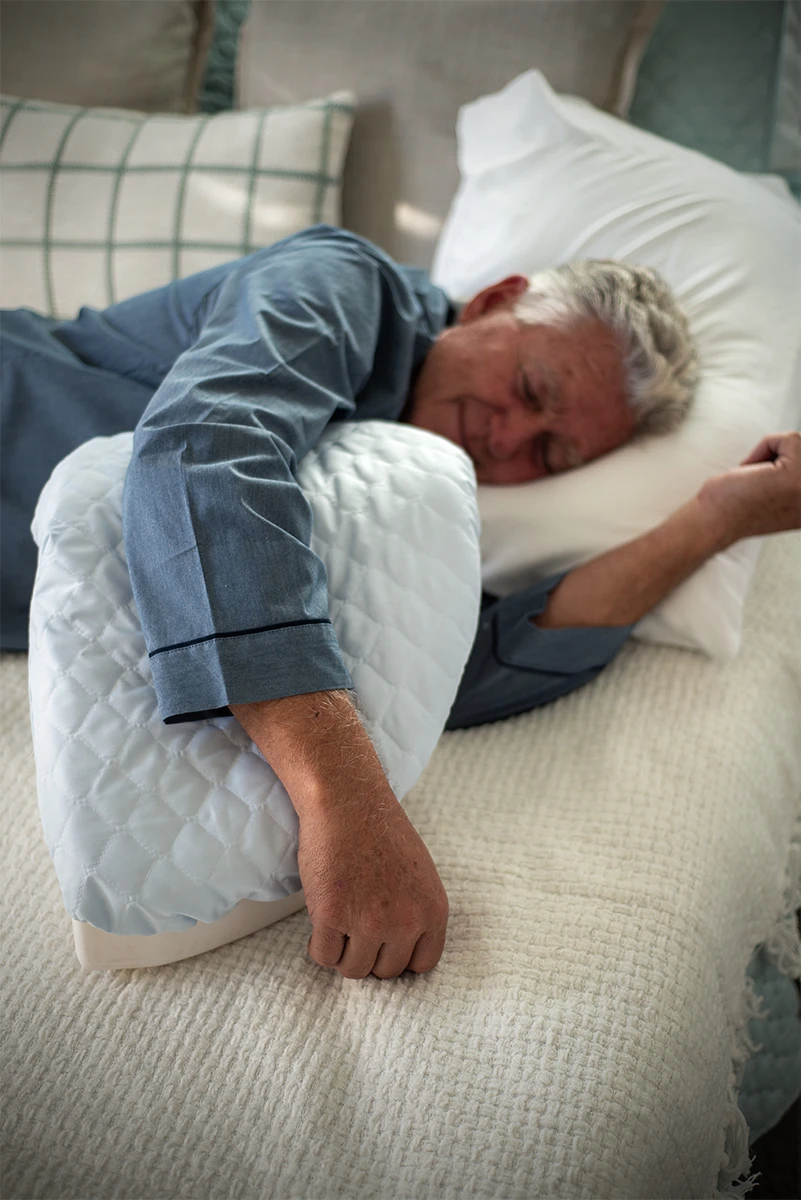
The geometry keeps the shoulder stable so patients can relax into restorative sleep stages — where growth hormone release, tissue repair, and collagen formation actually happen.
.webp)
Every design decision — the angle, the density, the contouring — maps back to what the research says post-surgical patients need: less pain interruption, better positioning, and more unbroken sleep.